




What Nigeria Tax Reform Really Means for Citizens and Businesses
For years, ordinary Nigerians have struggled to understand how the tax system works—why they must pay, what they owe, how to comply, and what benefits taxes bring to national development. With the rollout of the Nigeria Tax Reform, the Federal Government has set a new direction for fiscal clarity, fairness, and economic growth. But beyond government statements, what does this truly mean for the average citizen, the growing freelancer economy, small businesses, and larger corporations?
This article breaks down what Nigeria’s new tax reform really means for Nigerians, using simple language that empowers you to take advantage of the opportunities this new era offers.
1. Nigeria Tax Reform Means a Simpler, Clearer Tax System
For decades, one of the biggest problems in Nigeria’s tax environment has been complexity. Citizens often feel lost because the system was not built to communicate with ordinary people. The good news is that the new Nigeria Tax Reform puts simplicity and transparency at its core.
You can now expect:
- Cleaner rules
- Clearer categories
- Less paperwork
- More digital processes
- Easier filing and clearer communication
This reform moves Nigeria closer to global best practices—where individuals and businesses can understand their tax responsibilities without relying on expensive consultants.
2. Better Protection Against Multiple Taxation
Multiple taxation has been a major burden, especially for SMEs and informal businesses. Under the Nigeria Tax Reform, the government is working to:
- Eliminate illegal levies
- Remove duplicated taxes across local and state levels
- Create a unified list of lawful taxes
- Strengthen enforcement against extortion
For the first time in a long time, SMEs can operate with reduced fear of unplanned charges and harassment. This is one of the most immediate benefits the reform brings.
3. More Support for Small and Medium Enterprises (SMEs)
The heart of Nigeria’s economy lies in SMEs, and the Nigeria Tax Reform recognizes this reality. New measures include:
- Clearer thresholds for SME taxation
- Lower administrative burdens
- Better incentives for formalization
- Reduced penalties for first-time offenders
- More educational resources for business owners
When SMEs understand what they should pay—and what they shouldn’t—compliance rises, and business growth accelerates.
4. Personal Income Tax Becomes More Understandable
The New Nigeria Tax Reform emphasizes fairness. Citizens will find it easier to know:
- What they should pay based on earnings
- How PAYE works
- How side-gig income should be declared
- What allowances and deductions do they qualify for
- What penalties apply when they don’t comply
For millions of Nigerians working in multiple income streams—gig workers, creators, freelancers—this clarity brings peace of mind.
5. VAT Becomes More Transparent and Enforceable
VAT remains one of the most misunderstood taxes in the country. Under the Nigeria Tax Reform, we now have clearer guidance on:
- What goods and services attract VAT
- Which items are exempt
- How businesses should remit
- How to properly issue VAT invoices
This reduces confusion for both businesses and consumers, while also ensuring that government revenue is properly accounted for.
6. Better Digital Tools for Compliance
A major advancement in the New Nigeria Tax Reform is technology-driven efficiency. Filing taxes, tracking obligations, paying dues, and receiving receipts are now becoming easier through:
- Online platforms
- Automated systems
- Digital tax IDs
- Updated e-filing portals
- Mobile-friendly payment options
Technology is closing the gap between citizens and government, building a more trustworthy system for everyone.
7. Stronger Revenue for National Development
Ultimately, the Nigeria Tax Reform is not just about compliance—it is about building a country where:
- Roads work
- Schools function
- Hospitals improve
- Security strengthens
- Jobs are created
When tax systems are fair and transparent, more people willingly comply. And when more people comply, the government earns the revenue it needs to build a stronger nation.
This reform aims to finally connect the dots between taxes paid and national development delivered.
Why This Reform Matters to You
Whether you’re:
- An employee
- A freelancer
- An SME owner
- A corporation
- A student
- A retiree
- An entrepreneur in the informal sector
…this reform will shape your financial future.
Understanding it is not optional—it is necessary for personal success and national prosperity.
The Bottom Line: A Fairer, Smarter, More Prosperous Nigeria
The Nigeria Tax Reform marks a shift toward a more efficient, transparent, and growth-focused system. It signals a country ready to embrace modernization, increase revenue, support businesses, and empower its citizens.
But reforms only work when people understand them.
And that is why tax education—not just policy—is the real game changer.
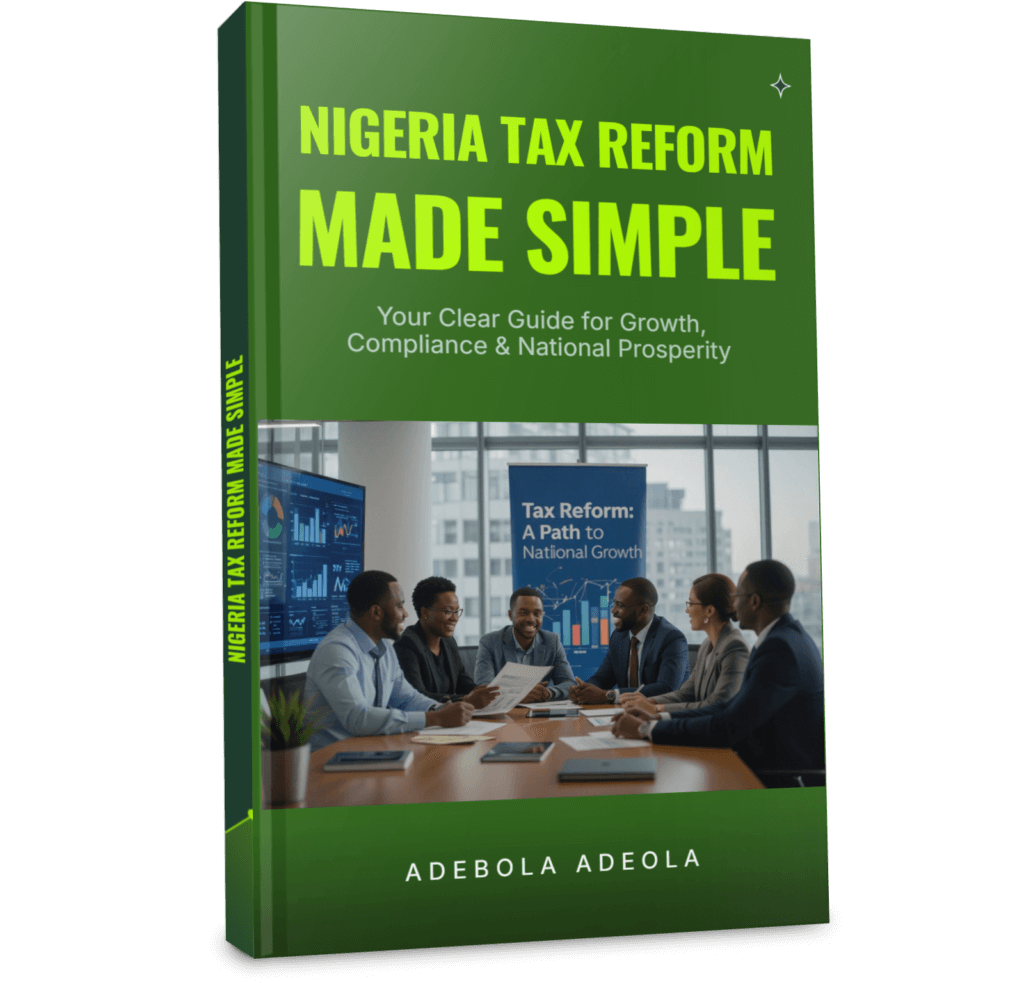
Nigeria is entering a new economic era—and you deserve to understand it.
Grab your copy of Nigeria Tax Reform Made Simple today and take control of your future with clarity, confidence, and peace of mind.
This is your guide to growth. Your roadmap to compliance. Your path to prosperity.
Start your journey now—Nigeria’s new tax era begins with you.

Prepared to expand access to reliable economic analysis and support decision-makers, this article comes from Mr. Adebola Adeola, CEO of Dinet Comms and Owner of PR CompaiPA.